
.svg)
.jpg)
Key Considerations for Customizing Medical Power Supplies
게시됨 1월 06, 2026 으로 Jessie Buaron
Blog Summary
- Three levels of customization:
- Modified standards: Simple tweaks (e.g., preset voltage, connector changes) for speed and cost-efficiency, but limited flexibility for unique medical needs.
- Value-add engineering: Moderate customization (e.g., PCB re-layout, firmware changes) offering design flexibility with higher NRE costs and longer lead times.
- Full custom PSUs: Ground-up designs for precise performance, strict IEC60601-1 compliance, and patient safety—ideal for complex or critical medical applications.
- Drivers for customization: Custom power supply units (PSUs) are essential for devices with unique electrical/mechanical requirements, patient-connected systems needing ultra-low leakage and 2× MOPP isolation, or rugged environments with EMI, shock, vibration, and extreme temperatures.
- Compliance and integration advantages: Starting with pre-certified IEC60601-1 platforms accelerates time-to-market and reduces costs. Custom solutions ensure seamless integration, advanced safety, and support for intelligent communication protocols (e.g., PMBus, CANBus) for modern medical devices.
Current trends in power supply units (PSU) for the medical industry are driven by advances in technology, precision, miniaturization, stricter safety standards, and the increasing complexity of medical devices. Medical PSU solutions must be carefully selected to ensure that they comply with strict medical safety standards (e.g. cardiac floating rating), offer high reliability, and are suitable for the specific application. Choosing the right partner for custom-designed PSU is critical, especially for applications with strict performance, reliability, or regulatory requirements. This blog covers considerations for customizing medical power supplies and a real-world example of a custom solution.
Customization Options
Other than standard PSUs, three levels of customization exist: modified standard, value-add and custom designs.
Modified standards involve simple parametric tweaks and minor mechanical changes, with generally no safety and reliability impacts. Examples are pre-set output voltage or current, simple connector changes, electrical modifications through firmware changes, leakage current, conformal coating, simple harnesses and mechanical mounting modifications. The key trade-off here is sacrificing deep customization for speed and cost-efficiency. While this approach uses a proven platform to minimize non-recurring engineering (NRE) costs and speed time-to-market, it may not be suitable for medical devices with unique form factors or complex power requirements.
Value-add engineering allows us to address more complex modifications without resorting to ground-up custom designs. This type of solution often includes changes involving elaborate electrical, mechanical, firmware modifications, a minor PCB re-layout, and various add-on components. This option provides a balanced trade-off between completely custom PSUs and off-the-shelf speed. It does bring greater design flexibility but also requires a moderate increase in NRE costs. Lead times also increase versus a modified standard. This approach can also require additional verification or recertification activities – adding further time and costs.
Custom PSUs deliver performance tailored to the exact need with precision, higher reliability, robust patient safety, and the strictest compliance with the IEC60601-1 medical standard. This path presents the most significant trade-offs in substantial upfront NRE investment and the longest development timeline. However, for critical or innovative medical applications, this is the only way to meet performance, efficiency and form factor requirements at the specified levels of safety and compliance.
Choosing the right option largely depends on the medical device’s complexity, regulatory needs, form-factor constraints, and time-to-market targets.
Why Choose Customization?
Performance optimization, safety and reliability
It is recommended to use custom PSUs if medical devices have unique electrical or mechanical needs. Examples are non-typical voltage, higher isolation, multiple outputs, power sequencing, and integration to fit the available space of the system.
Custom units are also applicable for patient-connected devices where direct contact with patients requires an ultra-low leakage current and 2x means of patient protection (MOPP) isolation. PSUs must also be ruggedized for harsh operating environments, where high electromagnetic interference (EMI), shock or vibration, or extreme temperatures are present. These are just a few examples. Other combinations of key custom design features that may not be supported by standard off-the-shelf PSUs are as follows:
Features | Importance in medical PSU |
Precise output voltage and current | Accurate operation |
Form factor and mounting | Optimized space utilization |
Digital control | Adaptability and programmability |
IEC 60601-1 and Class B EMI compliance | Safety and EMC |
Low leakage current | Patient protection |
Advanced thermal management | Reliability and longevity |
Modular and adjustable outputs | Flexibility and futureproofing |
High efficiency | Compactness and lower heat |
Intelligent monitoring | Maintenance and uptime |
Integrated battery backup | Operational continuity |
Firmware upgradable | Data and device security |
Therefore, it is highly recommended to work with a manufacturer that is experienced in medical-grade custom PSUs and has a proven track record in addressing the key features listed above. This partner should also be able to prioritize safety, ensure regulatory compliance, guarantee all performance needs are met, and have global manufacturing and support operations for supply continuity.
Regulatory compliance
As we touched on at the beginning, some commercial off-the-shelf PSUs come pre-certified to meet IEC 60601-1 requirements for patient protection. These typically include MOPP Type B (body) or BF (body floating) levels of isolation (see Advanced Energy’s medical power supplies section), and a very small number of PSUs are even pre-certified to CF-level isolation.
Starting the customization process with power supplies that already have medical safety approvals such as IEC 60601-1 can significantly streamline the process for medical device compliance. These pre-approved units serve as a compliant foundation, reducing the need for extensive requalification and simplifying risk management. By building on certified platforms, manufacturers can focus customization efforts on form factor, output characteristics, and integration features while maintaining regulatory integrity. Whether this is a modified-standard or value-add project, this approach accelerates time to market, lowers development costs, and ensures consistent adherence to global safety standards.
For a full custom PSU designed from the ground up, achieving regulatory compliance is a far more intensive process. Every aspect, from component selection and circuit layout to isolation barriers and thermal management, must be meticulously designed and documented to meet IEC 60601-1 standards from the outset. This path therefore requires significant upfront investment and should be used only when no existing platform can meet the device's unique requirements.
Special features and isolation needs
Another key reason to customize medical power supplies is to meet specific patient safety needs, especially when strong isolation is required. Devices that connect directly to patients like ECGs and infusion pumps need tight control over isolation voltage, leakage current and fault protection to prevent electrical shock or interference with critical body functions.
Off-the-shelf supplies may not meet these demands. Custom solutions can be designed with higher levels of isolation, floating outputs and built-in safety features to ensure compliance and protect patients.
Integration with device design
Seamless integration with device design is another reason to customize medical power supplies. Custom units can be tailored to fit tight mechanical spaces, match specific electrical interfaces, and meet thermal or environmental constraints. This makes it easier to embed the power supply into the final product without compromising performance or reliability. Additionally, with the growing use of AI and smart diagnostics, custom supplies can include digital communication features that support protocols like I2C, PMBus, ModBus, and CANBus among others enabling real-time monitoring, intelligent control and better system-level coordination.
While some integration challenges can be met with modified or value-add solutions, the complexity of these requirements is often a deciding factor in choosing between a simple modification and a full custom design.
Advanced Energy’s Custom PSUs for Medical Applications
Understanding the drivers for customization is a key first step. Advanced Energy (AE) can help designers navigate these complexities to deliver a reliable, compliant and optimized solution for the end-use medical device. Advanced Energy has a proven track record of designing custom PSUs that meet the most demanding medical applications.
Key qualities of AE custom solutions include application-specific precision of voltage, current and form factors to fit exact device needs, with PSUs optimized to perform according to the load profile and environmental requirements of the system.
High efficiency designs are employed to reduce heat and energy waste, and to ensure extended life of the PSU. This is complemented by proper thermal design approaches via fan-cooling, convection or conduction-cooling. All AE custom PSUs for medical devices are designed to meet the medical standard IEC60601-1, along with proper 2 x MOPP isolation, low leakage current and fault protection. Intelligent monitoring, control and communications are typically accommodated with the use of integrated interfaces such as PMBus, Ethernet and various protocols.
Case Study: Developing a Custom PSU for a High-End Ultrasound System
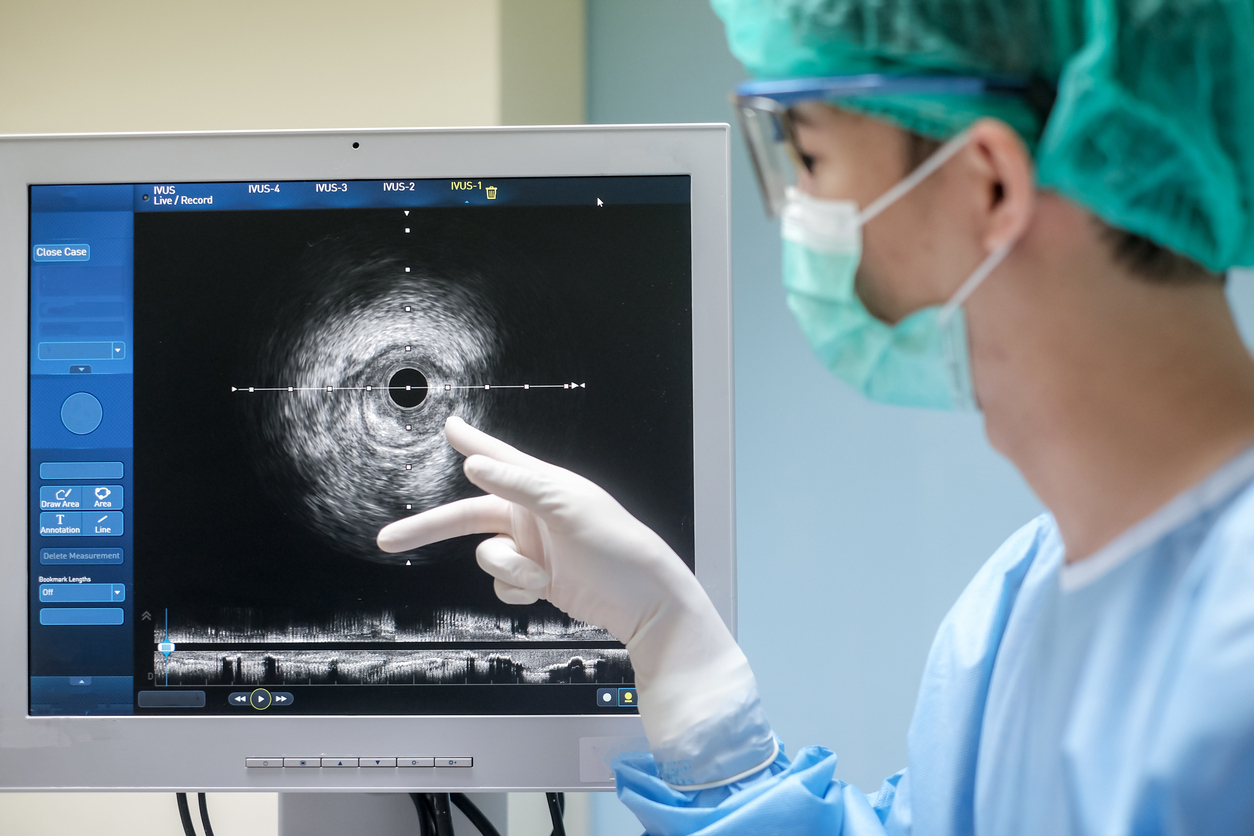
A medical imaging customer was looking for a competitive power solution for their existing high-end ultrasound system. Their system features some of the most advanced imaging technologies in the market. In medical devices such as ultrasound machines, the quality, size and reliability of the power supply are vital for accurate and consistent results to fulfill additional requirements such as minimal acoustic noise and system mobility.
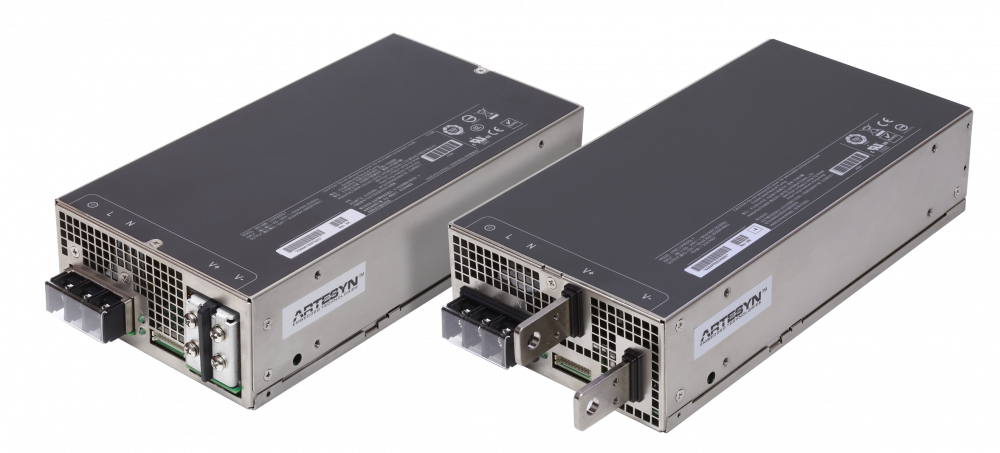 Fig. 1 Advanced Energy’s LCM1000 series AC-DC power supply provides a cost-effective solution for industrial and medical single output high power requirements.
Creating a custom solution while leveraging standard products saved time during the development cycle as the engineering team did not need to start from scratch. This fast development cycle ensured cost savings for the customer while the re-use of proven microcontroller units for control and communication enabled quick prototype sampling. AE’s ability to leverage components from high volume and reliable standard products like the LCM, NGB, LCC, and CNS series helped maximize cost savings for the customer. It also assured quality and reliability as it is a proven solution. For a broader selection, please see AE’s medical product portfolio, which includes a wide range of models to leverage.
Summary
Whatever the system needs, Advanced Energy has proven building blocks and deep application knowledge to simplify customers’ designs and shorten time to market. The use of high-power density and efficiency circuit blocks provides significant chassis size reduction, and the smaller size solution helps to minimize overall system space requirement.
Advanced Energy power supplies are designed to provide compact, high performance and reliable power conversion. In this case, these supplies ensured that the ultrasound device operated at its peak performance levels, delivering consistently accurate results.
For more information about Advanced Energy’s custom PSU solutions for medical applications, visit: Medical Power Supplies | Advanced Energy and Modified Standard and Custom Power Solutions | Advanced Energy.

Jessie Buaron
Advanced Energy
Jessie Buaron Jr. is a Senior Product Manager at Advanced Energy specializing in medical grade power supplies, working with global OEMs to create reliable, compliant, and high performance solutions for today’s most demanding medical devices. With over 25 years of experience in engineering and product strategy, he leads the development of custom SMPS for critical applications such as patient monitoring and imaging. Jessie partners closely with engineering and cross functional teams to overcome challenges in safety certification, thermal performance, EMI/EMC design, and integration—bringing a system level approach that delivers differentiated medical power solutions.
더 많은 게시물 Jessie Buaron